
Neapolitan Pizza vs. Traditional Pizza: What's the Difference?
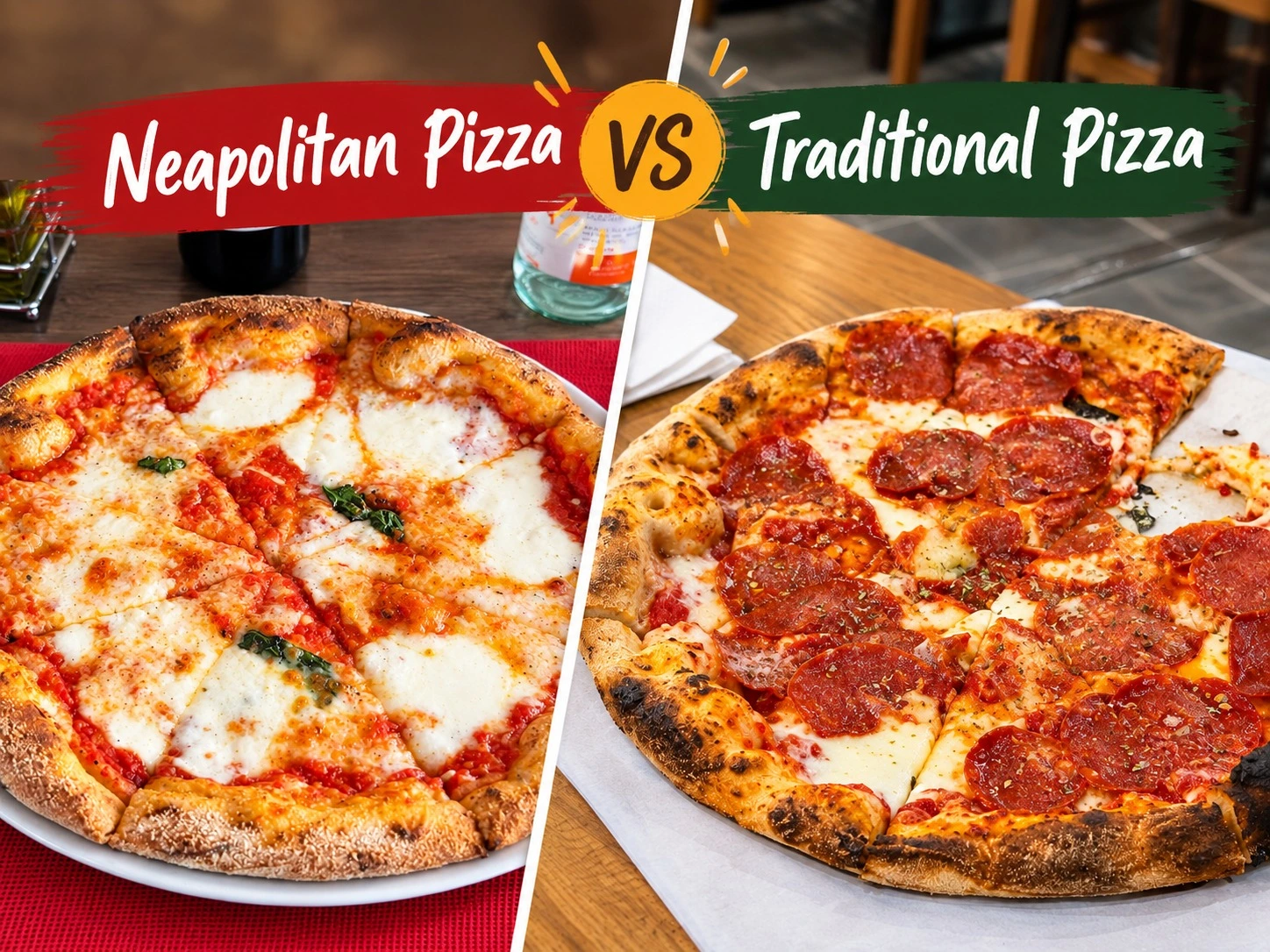
Pizza is pizza, right? Not quite. Ask any pizza lover, and they'll tell you there's a world of difference between a puffy, charred Neapolitan pie and the crispy, hearty slice you grew up eating. The crust, the toppings, the cooking time — even the way it's eaten — all set these two styles apart.
If you've ever stood in front of a menu wondering which one to order, this guide breaks it all down in plain, simple terms. By the end, you'll know exactly what makes each style unique, and which one might become your new favorite.
What Is Traditional Pizza?
"Traditional pizza" usually refers to the thicker-crust, well-loaded pies most people picture when they hear the word "pizza." Think New York-style slices, thick Sicilian squares, or deep-dish classics. These styles evolved as pizza traveled beyond Italy and adapted to local tastes.
Traditional pizza dough is:
- Rolled out, often with a rolling pin
- Lower in hydration, giving it a firmer, chewier bite
- Baked longer, at moderate oven temperatures
- Topped generously with cheese, meats, and vegetables
The result is a pizza that's crispy on the outside, sturdy enough to fold, and satisfying in a completely different way than its Italian ancestor. It's the pizza most people grew up eating at family dinners, pizzerias, and late-night hangouts.
What Is Neapolitan Pizza?
Neapolitan pizza is the original. It was born in Naples, Italy, centuries ago and follows strict rules that have barely changed since. In fact, UNESCO recognized the art of Neapolitan pizza-making as an official piece of world cultural heritage.
A true Neapolitan pizza is:
- Made with just four ingredients — type 00 flour, water, salt, and yeast
- Hand-stretched, never rolled
- Left to ferment slowly, often for 24 hours or more
- Baked in a wood-fired oven at extremely high heat for only 60 to 90 seconds
That short, blazing-hot bake creates the signature "cornicione" — the soft, airy, slightly charred crust edge that Neapolitan pizza is famous for. The center stays thin, soft, and almost custard-like, topped with simple ingredients like San Marzano tomatoes, fresh mozzarella, basil, and olive oil.
The Real Differences, Side by Side
Now that you know the basics, let's compare them directly.
Dough and Hydration
Neapolitan dough has a high water content, often 60 to 70 percent. This makes it soft, elastic, and light. Traditional pizza dough uses less water and sometimes includes oil or sugar, giving it a denser, crispier texture.
Crust Style
Neapolitan pizza has a puffy, soft crust with charred bubbles. You're meant to eat every bite, dipping it in sauce or oil if you like. Traditional pizza crust is thinner and crunchier, or in deep-dish styles, thick and bread-like.
Cooking Time and Temperature
A Neapolitan pizza cooks in under two minutes inside a wood-fired oven that reaches nearly 900 degrees Fahrenheit. Traditional pizza bakes for 10 to 20 minutes at a much lower temperature, giving the crust time to firm up and brown evenly.
Size and Slicing
Neapolitan pizzas are personal-sized, meant for one person, and eaten with a fork and knife or folded by hand. Traditional pizzas are larger, sliced into wedges, and made for sharing.
Toppings
Neapolitan pizza keeps toppings minimal so the dough and quality ingredients can shine. Traditional pizza often piles on cheese, meats, and vegetables for a heartier bite.
Texture When You Bite In
Neapolitan pizza is soft, chewy, and almost delicate. Traditional pizza is crispier and holds its shape, making it easier to eat on the go.
Here's a quick summary:
- Neapolitan: soft, thin, minimal toppings, wood-fired, fast bake, personal size
- Traditional: crispy or thick, generous toppings, standard oven, longer bake, shareable size
Why the Confusion Exists
Many pizzerias use the word "Neapolitan" loosely, even when their pizza doesn't follow the strict Italian method. That's part of why so many people aren't sure what actually separates the two styles. A pizza can look similar on the surface but taste completely different depending on the dough hydration, fermentation time, and oven type used to cook it.
This is also why the same pizza name can mean different things depending on where you order it. A "Margherita" at one restaurant might be a soft, wood-fired Neapolitan pie, while at another it's a crispy, oven-baked traditional pizza with the same toppings but a completely different texture.
Which One Should You Order?
It really comes down to what you're craving.
- Choose Neapolitan if you want something light, soft, and closer to what you'd eat on a trip to Italy
- Choose traditional pizza if you want something heartier, crispier, and loaded with toppings
Both styles have their place, and honestly, the best way to decide is to try both and see which one wins you over.
Where to Try Both Styles Done Right
If you're searching for an Italian restaurant in Boca Raton that takes both styles seriously, it helps to know what to look for. A kitchen that understands the difference between Neapolitan and traditional pizza will use different dough recipes, different oven setups, and different bake times for each style, rather than treating pizza as one-size-fits-all.
At Le Sorelle Restaurant, that distinction matters. Whether you're in the mood for a soft, wood-fired Neapolitan pie with San Marzano tomatoes and fresh mozzarella, or a heartier, traditional slice loaded with your favorite toppings, the goal is the same: made-from-scratch dough, quality ingredients, and a bake that respects the style you ordered.
If you've been searching for the best Italian restaurant in Boca Raton to settle the Neapolitan versus traditional debate for yourself, this is a great place to start. Come hungry, order both if you can't decide, and taste the difference for yourself.
Craving a slice right now? Stop by Le Sorelle Restaurant this week, or reach out to ask about tonight's wood-fired specials. A table (and a warm pizza) is waiting.
Reserve Your Table Today
Leave a Reply
FAQs
Pizza Margherita and spaghetti carbonara are widely considered two of the most popular traditional Italian dishes, both loved for their simplicity and bold flavors.
Yes. Authentic Italian cooking generally relies on a small number of high-quality ingredients rather than complicated techniques or long ingredient lists.
Authenticity usually comes down to traditional preparation methods, regional ingredients, and recipes that have been passed down over generations rather than heavily modified for other markets.
It varies by region and course. Northern Italian dishes tend to be richer and creamier, while Southern Italian and coastal dishes are often lighter, relying more on olive oil, tomatoes, and seafood.
Ordering a mix of antipasti, a pasta course, and a classic dessert is a great way to sample several traditional flavors in one sitting, especially at a restaurant that specializes in authentic Italian cuisine.